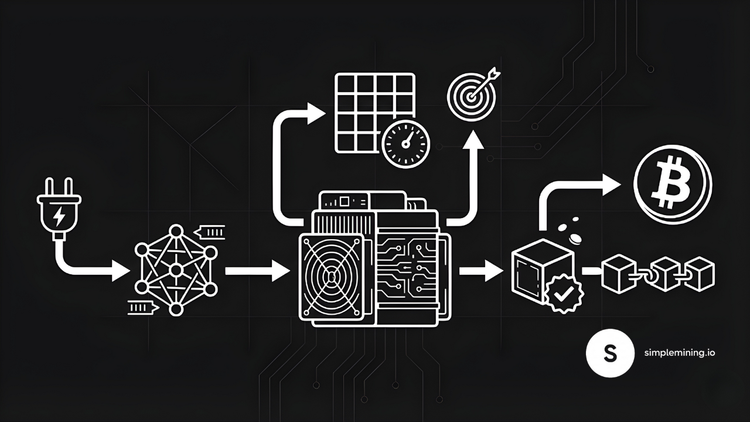
What Is a Bitcoin Block and Why Does It Matter?
Key Takeaways
- Bitcoin block: A file that records validated transactions on the blockchain, added about every ten minutes by miners who solve a proof-of-work puzzle.
- Block structure: Each block has a header (version, previous hash, Merkle root, timestamp, difficulty target, nonce) and a body (transactions organized in a Merkle tree).
- Block reward: Miners earn the block subsidy (3.125 BTC since the 2024 halving) plus every transaction fee in the block.
- Immutability: Rewriting a mined block means redoing proof-of-work for it and every block after it while out-pacing the network hashrate.
- Security model: Proof-of-work plus cryptographic chaining plus thousands of independent nodes create a trustless network with no single point of failure.
A Bitcoin block is a file that records a batch of validated transactions on the blockchain. Miners create a new block about every ten minutes by solving a cryptographic puzzle. Each block links to the one before it, forming an unbroken chain that anyone can audit. Understanding blocks is the first step to understanding why Bitcoin works without a central authority.
What Is a Bitcoin Block?
A Bitcoin block is a container file that stores a batch of validated transactions on the Bitcoin blockchain. Think of it as one page in a massive public ledger that anyone can read and nobody can erase.
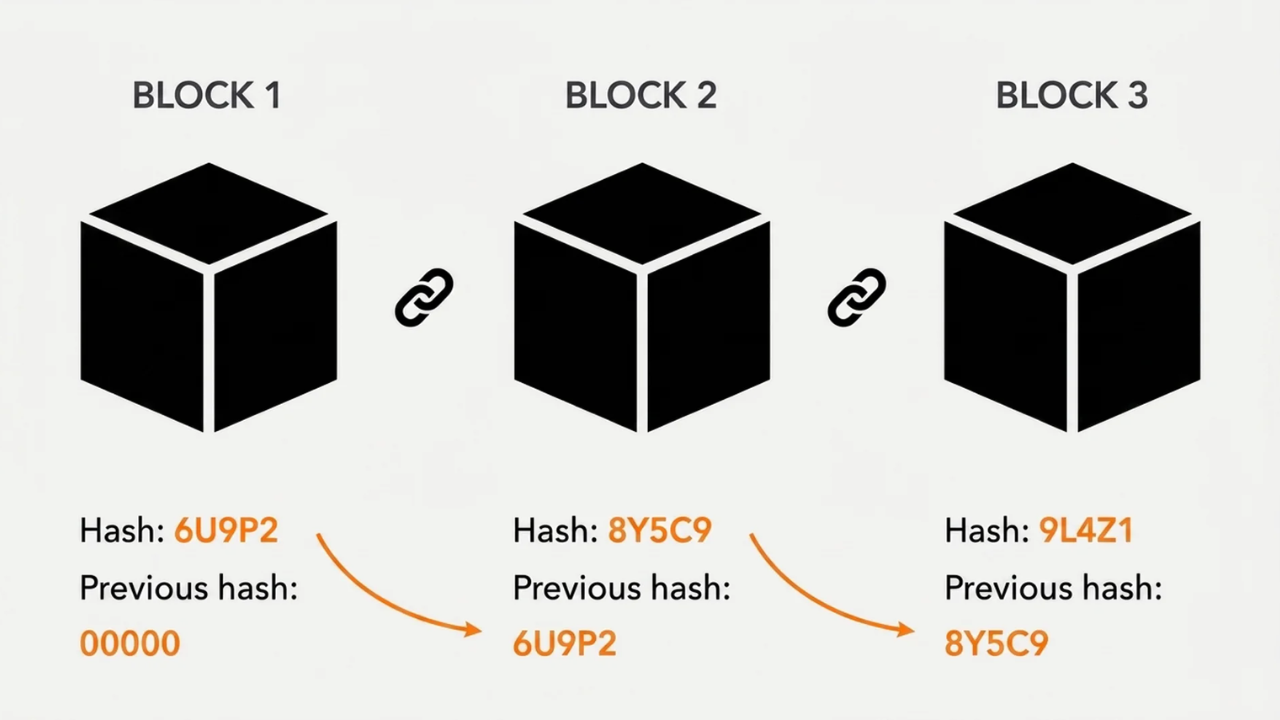
Every block links to the block before it through a cryptographic hash. That link is what creates the blockchain.
- Bitcoin block: A file containing validated transaction data added to the chain about every ten minutes.
- Blockchain: The public ledger formed by linking blocks in chronological order.
- Block height: The position of a block in the chain starting from the genesis block at height 0.
What Is Inside a Bitcoin Block?
Every Bitcoin block has two parts, a header with metadata and a body with transaction data. The two together form the smallest unit of consensus on the Bitcoin network.
Block Header
The header is the block's label. It carries everything the network needs to verify the block and slot it into the chain.
- Previous block hash (the link to the prior block)
- Timestamp (when the block was built)
- Merkle root (a single hash that summarizes every transaction in the block)
- Difficulty target (the threshold the block hash had to beat)
- Nonce (the number the miner changed to find a valid hash)
- Version (which consensus rules the block follows)
The full header is 80 bytes. That compact footprint is what lets lightweight wallets verify the chain without downloading every transaction.
Transaction Data
The body holds the transactions themselves. A data structure called a Merkle tree organizes them. It condenses thousands of transfers into one compact hash that sits in the header.
Each block has a capacity limit of about one megabyte of data (weight-adjusted for SegWit). Most blocks carry 2,000 to 4,000 transactions.
The first entry in every block is the coinbase transaction. It mints new Bitcoin and sends it to the miner who won the block.
Block Hash and Nonce
Every block has a unique hash, a 64-character fingerprint derived from its contents. Change one byte and you get a different hash.
The nonce is the number miners cycle through while searching for a valid hash. Modern ASIC miners test trillions of nonce values per second looking for one that produces a block hash below the current difficulty target.
How Are Bitcoin Blocks Created?
Miners create Bitcoin blocks by bundling pending transactions and solving a proof-of-work puzzle for the right to add the block to the chain. The process runs in four steps.
1. Collect pending transactions. Miners pull unconfirmed transactions from the mempool, the queue of pending activity. They favor transactions with higher fee rates to maximize revenue.
2. Assemble the candidate block. The miner organizes selected transactions into a candidate block. They build the Merkle root and draft the header. The block is ready to be sealed.
3. Solve the proof-of-work puzzle. Now comes the compute-heavy work. The miner hashes the header with different nonce values until the result falls below the difficulty target. This is proof-of-work in action.
A modern ASIC can test trillions of nonce values per second. Even so, the full network takes about ten minutes of combined effort to find a valid hash.
4. Broadcast the winning block. The first miner to find a valid hash broadcasts the block across the network. Other nodes verify the block and add it to their copy of the chain. The winning miner collects the block subsidy and every transaction fee inside the block.
How Are Bitcoin Blocks Validated on the Blockchain?
Every full node checks each new block against Bitcoin's consensus rules before adding it to the chain. The process is independent, parallel, and automatic.
Full nodes run software that holds a complete copy of the blockchain. When a new block arrives, a node runs several checks in sequence.
- Proof-of-work: the block's hash meets the current difficulty target
- Transactions: every transaction is valid and has not been spent before
- Links: the block points to the correct previous hash
- Weight: the total block weight stays under the protocol limit
A block gets added to the chain when it passes every check. This distributed verification is what lets Bitcoin work without a trusted third party.
Once a block is buried under several more blocks, rewriting it becomes impractical. An attacker would have to redo proof-of-work for that block and every block after it. They would also have to out-pace the combined hashrate of the rest of the network.
How Long Does It Take to Mine a Bitcoin Block?
The Bitcoin network targets an average block time of ten minutes through a difficulty adjustment every 2,016 blocks.
Some blocks arrive in two minutes. Others take thirty. The long-run average stays near ten minutes because of a built-in feedback loop (the difficulty adjustment).
Every 2,016 blocks (about two weeks), the protocol recalibrates difficulty based on how fast the prior 2,016 blocks came in.
| Scenario | Network response |
|---|---|
| Blocks arriving faster than ten minutes | Difficulty rises |
| Blocks arriving slower than ten minutes | Difficulty falls |
| New hashrate comes online | Difficulty rises |
| Hashrate leaves the network | Difficulty falls |
The mechanism keeps Bitcoin's issuance schedule predictable no matter how much hashrate joins or leaves the network. For a live view of current difficulty and hashprice, check the Luxor Hashrate Index.
How Many Bitcoins Are in a Block?
A mined Bitcoin block contains the current block subsidy plus every transaction fee paid by users inside the block. The two together are called the block reward.
Current Block Reward
The block subsidy is the primary miner incentive. Since the 2024 halving, the subsidy sits at 3.125 BTC per block. New Bitcoin enters circulation through the subsidy. There is no other source of new supply.
Transaction Fees
Users attach fees to their transactions to compete for block space. On busy days, fees can add meaningful revenue beyond the subsidy.
The fee market swings with network demand and onchain activity cycles. For a live look at mempool fees, use mempool.space.
Bitcoin Halving and Future Rewards
Every 210,000 blocks (about four years), the block subsidy is cut in half. This event is called the halving.
At launch, miners earned 50 BTC per block. After four halvings, the subsidy is 3.125 BTC. The subsidy will keep dropping until it rounds to zero around the year 2140.
The total Bitcoin supply is capped at 21 million. As the subsidy falls, fees will take a larger share of miner revenue. That shift is the core of Bitcoin's long-term security model.
Why Do Bitcoin Blocks Matter for Network Security?
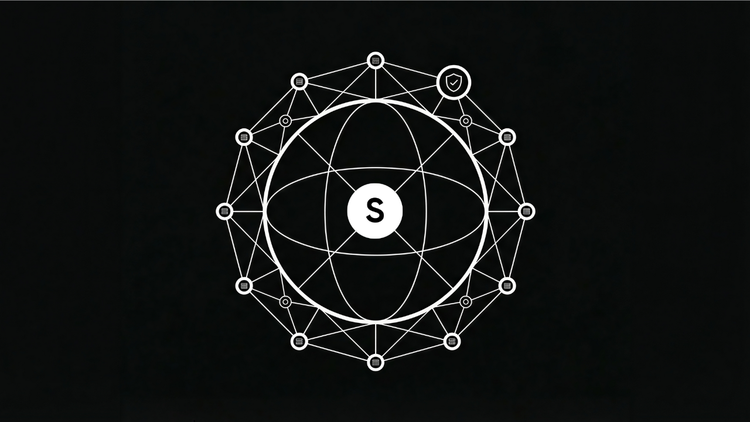
Bitcoin blocks secure the network by chaining transactions under proof-of-work across thousands of independent nodes. Three features make the block structure hard to attack.
- Cryptographic chaining: Each block contains the prior block's hash, so tampering with any old block breaks every block after it.
- Proof-of-work: Building a valid block costs real energy and real hardware time, which makes rewriting history expensive.
- Decentralization: Thousands of nodes check every block on their own, with no single point of failure.
Together these features make double-spending (paying the same Bitcoin twice) close to impossible after a few confirmations. The deeper a block sits in the chain, the more secure its transactions become.
How Do You View the Latest Bitcoin Block?
Use a block explorer to view any Bitcoin block in real time. The Bitcoin blockchain is public. Anyone with a browser can look up any block ever mined.
Three popular explorers stand out:
- mempool.space
- Blockstream Explorer
- Blockchain.com
Search by block height. You can also search by transaction ID or by wallet address.
Each block page shows:
- Block height and timestamp
- Number of transactions and total value transferred
- The mining pool that won the block
- The block hash and the previous block hash
This transparency lets anyone audit the blockchain without trusting a third party.
What Happens After a Bitcoin Block Is Mined?
Once a valid block is broadcast it propagates to every node, gets confirmed, and starts getting buried while the miner's reward matures. Every step happens in seconds.
The block spreads across the network as nodes relay it to their peers. Each node verifies the block before adding it. Within seconds the new block reaches nodes around the world.
Miners start work on the next block the instant the prior one lands. They point their candidate block at the new tip of the chain and begin searching for another valid hash. The race never stops.
Transactions inside the block move from unconfirmed to confirmed. Each new block stacked on top adds another confirmation.
The winning miner's reward is locked for 100 blocks (about 16 hours) before it can be spent. The rule prevents issues if a longer chain orphans the block.
How Understanding Bitcoin Blocks Helps You Mine Smarter
Every mining decision ties back to blocks. The block reward, difficulty, and fees set the revenue line. Your power rate sets one side of the cost line. Hardware efficiency and uptime set the other. The gap between the two is your margin.
When difficulty climbs faster than Bitcoin's price, margin compresses. When price rises or hashrate leaves the network, margin widens.
Fee spikes add another variable. Events like ordinal mints or mempool congestion can push daily revenue above the subsidy alone.
At Simple Mining we run over 20,000 hosted miners on about 65% renewable power. We watch hashrate delivery and fee market conditions across the fleet in real time. The Simple Mining client dashboard gives investors the same view into their own machines. You see hashrate and uptime next to payouts and network conditions.
Understanding blocks turns mining from a black box into a quantified investment.
FAQs
How much is one Bitcoin block worth?
A Bitcoin block is worth the block subsidy plus every transaction fee inside it. Since the 2024 halving the subsidy is 3.125 BTC. Spot price and fee activity determine the dollar value of each block.
What does it mean to solve a Bitcoin block?
Solving a Bitcoin block means finding a nonce value that produces a block hash below the network's difficulty target. The first miner to find that hash wins the block and collects the reward.
Can a Bitcoin block be changed after it is mined?
Changing a mined Bitcoin block is close to impossible. Any edit changes the block's hash, which breaks the link to every block that follows. To make the edit stick an attacker would have to redo proof-of-work for that block and every block after it while out-pacing the rest of the network.
How many transactions fit in one Bitcoin block?
Most Bitcoin blocks carry 2,000 to 4,000 transactions. The 4-million weight-unit limit sets the cap. Transaction size decides the exact count in any given block.
The Block Is the Unit of Proof
A block is the unit that turns trust into proof. Every watt of electricity and every cycle of hashrate exists to produce one more.
Want to see how hashrate becomes blocks and payouts? Start a 7-day free trial with Simple Mining and watch your miner contribute to the next block in real time.
By Josh Heine, Content Strategist at Simple Mining
Published: July 28, 2025
Modified: April 20, 2026